Electric bicycles, or e-bikes, have rapidly evolved from niche gadgets to a significant force in personal mobility, fitness, and leisure. They offer a compelling blend of traditional cycling and powerful electric assistance, democratizing the joy of traveling on two wheels. But like any technology, e-bikes come with their own set of advantages and considerations. This guide provides a comprehensive look at the pros and cons and will help you decide if an e-bike is the right choice for your lifestyle.
The advantages: Opening up new opportunities
E-bikes enhance the inherent joy of cycling while simultaneously mitigating many of its traditional challenges. The advantages are numerous and transformative:
-
Effortless uphill driving & Wind resistance:
-
Conquering topography: Steep climbs and challenging inclines become manageable, even enjoyable, and take away the fear of hilly routes.
-
Defying headwinds: Strong winds, the natural enemy of cyclists, lose much of their terror and ensure a consistent and pleasant riding experience, regardless of the weather.
-
-
Improved commuting & Efficiency:
-
Arriving without sweat: Arrive at your destination refreshed and invigorated, instead of drenched in sweat. This makes commuting by bike a real option for a wider professional audience.
-
Faster, smarter routes: The acceleration of an e-bike is helpful in stop-and-go city traffic. Using bike paths often means avoiding traffic jams, resulting in faster and less stressful commutes.
-
Cost savings: Significantly cheaper than owning a car, with no fuel costs, minimal parking fees, and low insurance premiums. Charging the battery costs only a few cents.
-
-
Wider accessibility & Inclusivity:
-
Fitness for all levels: E-bikes allow people of all ages and fitness levels to enjoy cycling – from those recovering from an injury to seniors seeking gentle exercise.
-
Carpooling: It allows riders with different abilities to cycle together, promoting social bonding and shared experiences in nature.
-
-
Increased range & Exploration:
-
Go further, see more: The electric assistance drastically extends your comfortable range and encourages you to explore new routes, scenic detours and longer adventures that might seem daunting on a traditional bike.
-
Adventure made easy: It transforms long-distance tours and multi-day trips into more easily achievable plans.
-
-
Real sport & Health benefits:
-
Active support: Since most e-bikes are pedelecs, the motor only engages when you pedal. This ensures an effective cardiovascular workout.
-
Increased activity: Studies show that e-bike riders tend to ride more frequently and for longer periods than traditional cyclists, which improves overall health and well-being.
-
-
Environment- & Economic friendliness:
-
Zero emissions: E-bikes do not produce direct exhaust fumes, which contributes to cleaner air and quieter cities and is in line with sustainable transport goals.
-
Reduction of traffic congestion: More e-bike users can relieve urban traffic congestion, which benefits everyone.
-

The disadvantages: Factors to consider
Despite their many advantages, e-bikes are not without their drawbacks. Potential buyers should be aware of the following points:
-
Higher acquisition costs:
-
Required investment: High-quality e-bikes typically start at around €1,500 and can easily exceed €5,000, which represents a significant initial investment compared to conventional bicycles.
-
-
Higher weight & Challenges in transportation:
-
Heavier machines: The motor and battery add considerable weight; e-bikes often weigh between 18 and 36 kg.
-
Difficult handling: This extra weight can make lifting onto car carriers, carrying up stairs, or maneuvering in tight spaces more difficult, especially when the battery is empty.
-
-
complexity & Maintenance costs:
-
Specialized components: Although they are generally reliable, the integrated electrical systems (motor, battery, controller) require specialized knowledge for repairs.
-
Limited workshop council: Not all local bicycle shops are equipped to service specific e-bike brands or motor systems, which can potentially lead to higher repair costs and longer waiting times.
-
-
"Range anxiety" & Loading logistics:
-
Concerns about battery life: Similar to electric cars, drivers can experience "range anxiety" – the worry that the battery will run out in the middle of the journey.
-
Variable range: The actual range depends heavily on factors such as terrain, rider weight, weather conditions and the selected support level, requiring more careful tour planning for longer rides.
-
Charging time: Unlike the quick refueling of cars, a full e-bike battery charge can take 3 to 8 hours, requiring planning and foresight.
-
-
Regulatory labyrinth:
-
Inconsistent laws: E-bike regulations, including speed limits and where different classes (e.g., cycle paths vs. roads) are allowed to be ridden, can vary greatly depending on the country, region, or even city.
-
Research is important: It is important to be informed about local laws to ensure you are legally compliant while traveling.
-
-
Security concerns:
-
Attractive destination: Because of their high value, e-bikes are more interesting to thieves than traditional bicycles.
-
Increased security requirements: Requires investment in robust locks and possibly theft insurance.
-
The e-bike suited to the terrain: A specialized approach
The ideal e-bike experience depends heavily on the terrain and intended use. Choosing the right bike increases safety, performance, and riding enjoyment.
-
Commuting in the city & paved roads:
-
Ideal choice: City e-bikes or hybrid e-bikes.
-
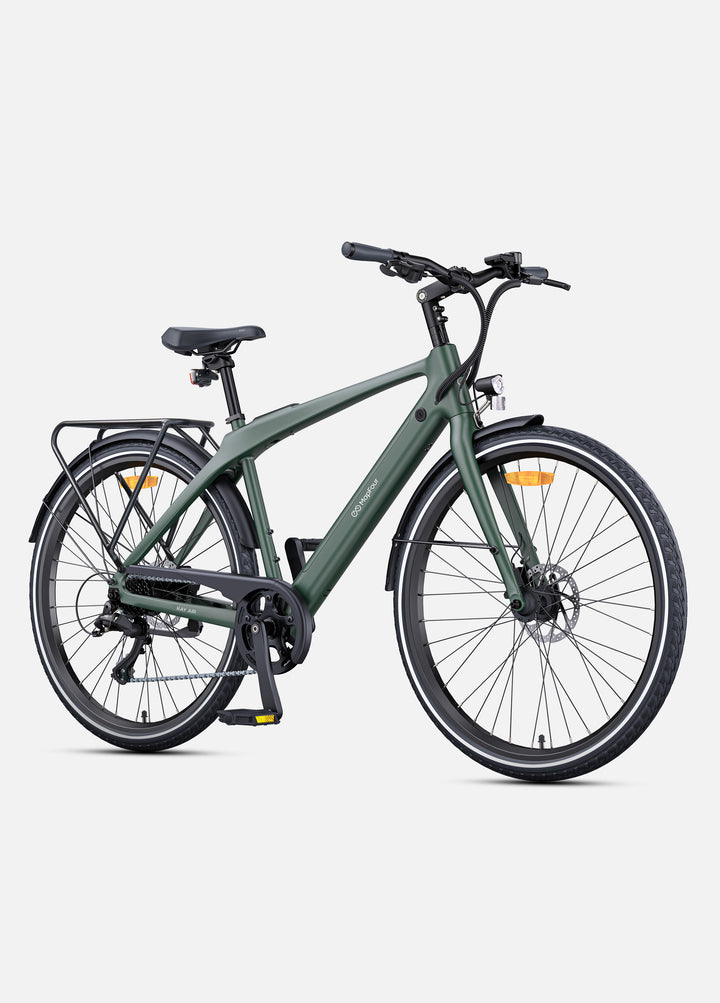
Features: They often feature puncture-resistant, medium-width tires, full mudguards for weather protection, integrated lights, and luggage racks. They usually offer an upright riding position for comfort and good visibility in traffic.
-
-
Steep climbs & technical mountain trails:
-
Ideal choice: E-mountain bikes (eMTBs).
-
Features: They require a powerful mid-drive motor for superior torque and efficiency on climbs, utilizing the gears. Robust suspension absorbs shocks, wide knobby tires provide grip, and powerful hydraulic disc brakes ensure controlled descents.
-
-
gravel roads & unpaved roads:
-
Ideal choice: Gravel e-bikes or hardtail eMTBs (front suspension only).
-
Features: Wider, grippier tires than those on city bikes offer more traction and stability on loose surfaces. They provide a good balance between comfort and performance without the added weight of full suspension.
-
-
snow, sand & soft surfaces:
-
Ideal choice: Fatbike e-bikes.
-
Features: Ultra-wide tires (4 inches or more) run at low pressure allow the bike to "glide" over soft surfaces instead of sinking in. Motor assistance is particularly beneficial in these high-resistance environments.
-
-
Rain & icy conditions:
-
Safety first: Driving on ice is extremely dangerous and is only recommended with special spiked tires.
-
Characteristics of wet weather: When riding in the rain, look for e-bikes with full mudguards, waterproof electrical components and powerful hydraulic disc brakes that maintain superior braking power in wet conditions.
-
Effects of cold: Please note that extremely cold temperatures can significantly reduce battery performance and range.
-

Behind the scenes: E-bike core elements explained
Understanding the basic components of an e-bike demystifies how it works and helps in making informed purchasing decisions.
-
The motor: The heart of the e-bike:
-
Hub motors: Mounted in the wheel hub (front or rear). Front motors distribute the weight, while rear motors offer a "push" sensation and usually better traction.
-
Mid-engines: Positioned at the bottom bracket, they transfer power directly to the drivetrain. This central placement improves balance, and the use of bicycle gears makes them highly efficient on varied terrain and climbs.
-
-
The battery: The energy source:
-
Voltage (V): Indicates the system power; higher voltage often means more torque. 36 V and 48 V are common.
-
Ampere-hours (Ah): This stands for energy storage capacity; more Ah potentially mean more range.
-
Watt-hours (Wh): The most accurate measure of total capacity (V × Ah = Wh) correlates directly with the estimated range. Lithium-ion is the standard due to its high energy density and longevity.
-
-
The controller: The central nervous system:
-
Intelligent Management: This on-board computer controls the energy flow from the battery to the motor and interprets the rider's inputs (support level, throttle grip) as well as sensor data for a smooth ride.
-
-
drive & Brakes:
-
Drive: Includes pedals, cranks, chain and gears; works in conjunction with the motor (especially in mid-drive motors) for efficient power transmission.
-
Brakes: Given the higher speeds and weight, reliable brakes are crucial. Hydraulic disc brakes are standard on quality e-bikes and offer superior control in all weather conditions.
-
The e-bike experience: impressions, sounds and feelings
The first ride on an e-bike is often described as exhilarating and eye-opening. The subtle yet powerful boost with the first pedal stroke feels almost magical.
-
The sound world: A gentle, steady hum from the engine accompanies your journey, blending with the ambient sounds – the rustling of leaves, the hum of the city, the rush of the wind. It's an intimate acoustic experience, far less isolating than in a car.
-
The optics: The added speed and range open up new perspectives. You notice details in your surroundings that you previously overlooked and effortlessly take scenic detours. E-biking offers an immersive visual experience that integrates you into the landscape.
-
The feeling: A profound sense of freedom and enhanced performance defines the e-bike experience. Hills that once meant physical torture now feel like effortless momentum. Headwinds become irrelevant. While still a physical activity, the effort remains manageable and enjoyable – resulting in a satisfying "good burn" rather than torture. Commuters often praise arriving feeling refreshed and full of energy.

Practical advice for aspiring e-bikers
Embarking on your e-bike journey is an exciting undertaking. Here are some important tips for beginners:
-
Choosing your first e-bike:
-
Define intended use: Be clear about your main needs: commuting, errands, trails, or leisure rides. This will determine the style (e.g., city bike, cruiser, MTB, folding bike).
-
Test drives, test drives, test drives: If possible, test drive different models and engine types. This practical experience is invaluable for assessing handling, responsiveness, and comfort.
-
Invest in quality: Even if budget plays a role, a reputable brand with quality components usually pays off through greater safety, reliability and long-term enjoyment.
-
Weight & Consider storage: If you need to lift the bike or store it in tight spaces, take the weight into account in your decision.
-
-
Safety first:
-
Always wear a helmet: Non-negotiable. Higher speeds make head protection even more important.
-
Be visible: Use your front and rear lights even during the day and wear light-colored or reflective clothing.
-
Practicing braking: E-bikes are heavier and faster, requiring longer braking distances. Practice braking techniques in a safe area to familiarize yourself with the braking power.
-
Drive predictably: Signal your turns, obey traffic rules and stay alert.
-
-
Maintenance and care:
-
Regular cleaning: Keep your e-bike, especially the drive system, clean to extend the lifespan of the components.
-
Check tire pressure: Correct tire pressure before each ride ensures a smoother ride, maximizes battery efficiency and reduces the risk of breakdowns.
-
Battery care: Follow the manufacturer's charging guidelines and avoid extreme temperatures for optimal lifespan.
-
Professional inspections: Like any vehicle, your e-bike benefits from regular professional maintenance to ensure safety and performance.
-
The electric bicycle is more than just a gadget; it's a tool that redefines how we move, experience our environment, and perceive our physical capabilities. By understanding its advantages and disadvantages, the technology, and the unique riding experience, new riders can confidently and enthusiastically become part of the growing e-bike revolution.