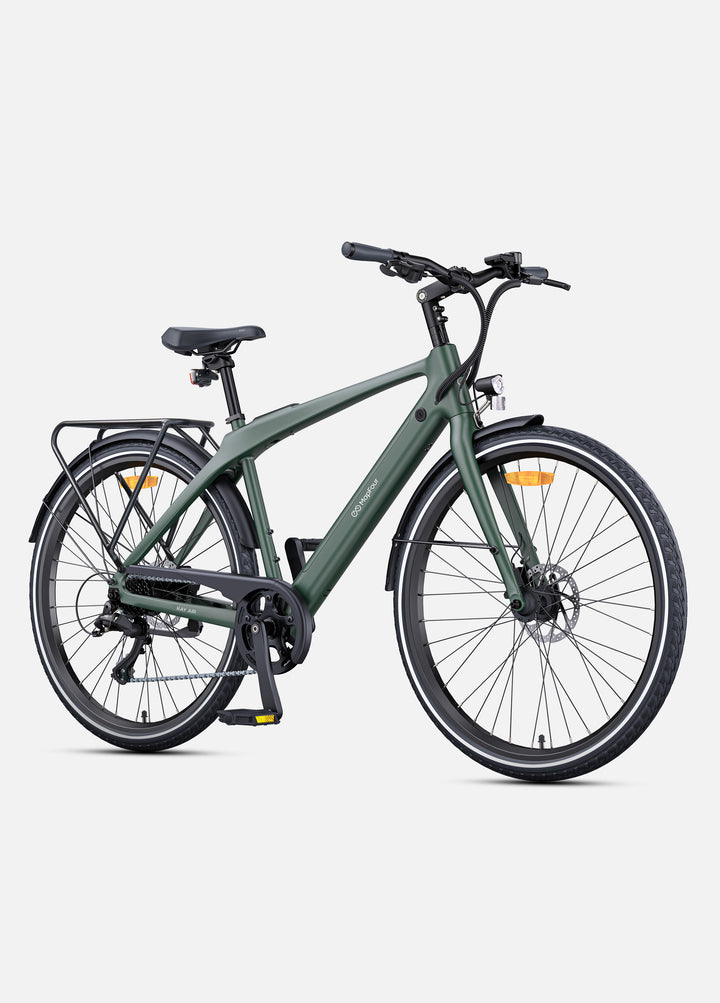
Electric bicycles, or e-bikes, are revolutionizing personal transportation and leisure activities. They are far more than just conventional bicycles with a motor; they offer an exciting blend of human power and technological assistance, making cycling accessible and appealing to a wider audience. This guide explores the diverse world of e-bikes, examines their core components, and provides practical advice for navigating the market.
What exactly is an e-bike?
An e-bike is essentially a bicycle equipped with an integrated electric motor, battery, and control system that provides power assistance to the rider. Unlike mopeds or electric motorcycles, the rider typically has to pedal to activate the motor, resulting in a natural and intuitive riding experience. The electric boost compensates for inclines, extends the range, and allows the rider to easily overcome headwinds. This transforms everyday commutes into invigorating rides and opens up new possibilities for adventure.

The technological heartbeat: Key e-bike components
Every e-bike relies on a sophisticated interplay of four main components to unleash its "superpower" effect:
-
The engine: Your silent partner
The motor is the driving force behind the e-bike. European regulations generally limit standard e-bike motors to 250 W continuous power. Two main types dominate the market:
-
Hub motors: Integrated directly into the front or rear wheel hub, these are often more affordable, reliable, and require less maintenance. Rear hub motors provide a natural "push" sensation, making them ideal for city traffic and flat terrain; they are commonly found on city and folding e-bikes.
-
Mid-engines: These motors are located at the bottom bracket of the bicycle and directly drive the drivetrain. This central placement optimizes weight distribution and significantly improves handling on varying terrain. Mid-drive motor systems utilize the bicycle's gear system, allowing the motor to operate at maximum efficiency, resulting in superior torque and climbing ability – the preferred choice for e-trekking bikes and e-MTBs.
-
-
The battery: your electric fuel tank
E-bike batteries, predominantly lithium-ion batteries, are chosen for their high energy density and longevity. Capacity is measured in watt-hours (Wh), a product of voltage (V) and ampere-hours (Ah). A higher Wh value directly translates to a greater range. Most e-bike batteries have a capacity between 400 Wh and over 750 Wh. The battery's placement significantly influences the bike's balance and aesthetics.
-
Integration in the downtube: A popular modern design, especially in Europe, where the battery is elegantly hidden in the down tube of the frame, offering excellent weight distribution and a sleek look.
-
Luggage carrier mounting: More commonly found on inexpensive city bikes or cargo bikes; this placement can make the bike feel more "rear-heavy".
-
-
The controller: The brain of the operation
The controller manages the flow of electricity from the battery to the motor and interprets rider input and sensor data. It allows the rider to select assistance levels, monitors the battery status, and ensures smooth system operation.A handlebar-mounted display typically provides real-time data on speed, distance, and battery life. Many modern systems also offer smartphone integration for navigation and route tracking.
-
The sensors: The nervous system of the e-bike
Sensors detect the rider's activity and transmit information to the controller to determine the required level of assistance:
-
Cadence sensors: These simpler sensors only detect pedal movement and activate the motor based on the selected assistance mode, not on the rider's effort. This can sometimes result in a less nuanced "on/off" power transmission.
-
Torque sensors: As a more advanced technology, torque sensors measure how much force the rider applies to the pedals. The harder you pedal, the more assistance the motor provides, creating an extremely intuitive and natural riding experience where your own effort is seamlessly amplified. Torque measurement is standard on all mid-drive motors and premium e-bikes.
-
E-bike types for every adventure
The versatility of e-bikes has led to a specialization in design that caters to a wide variety of riding scenarios:
-
City e-bikes: Designed for city traffic and leisurely rides, they often feature a comfortable upright seating position, mudguards, integrated lights, and a luggage rack. Step-through frames are popular for easy mounting and dismounting.
-
Key features: Hub motor, comfortable saddle, often hub gears for low maintenance.
-
Ideal for: Daily commuting, errands, leisure activities.
-
-
Trekking & Hybrid e-bikes: These all-rounders are perfect for mixed terrain, from paved roads to light gravel paths. They offer a balanced ratio of comfort and performance for longer rides and tours.
-
Key features: Mid-drive motor, suspension fork, often wider tires, integrated rack and lighting.
-
Ideal for: Long-distance tours, light off-road adventures, fitness training.
-
-
E-mountain bikes (E-MTBs): Built to conquer challenging trails, e-MTBs feature robust frames, powerful mid-drive motors, and advanced suspension systems.
-
Key features: Powerful mid-drive motor, full suspension (front and rear), hydraulic disc brakes, grippy tires.
-
Ideal for: Technical singletracks, aggressive off-road riding, downhill descents.
-
-
Cargo e-bikes: Designed for transporting heavy loads, from weekly groceries to children, they often feature extended frames, front or rear loading platforms, or even integrated storage boxes.
-
Key features: Stable frame, powerful mid-drive motor, high-capacity battery, robust luggage racks or loading platforms.
-
Ideal for: Family transport, commercial deliveries, replacement for the car when running errands.
-
-
Folding e-bikes: Compact and portable, these bikes are ideal for multimodal commuting or for people with limited storage space.
-
Key features: Small wheels, often hub motors, quick-release folding mechanisms.
-
Ideal for: Commuters using public transport, city dwellers, motorhome/boat owners.
-
Choosing the right e-bike: A scenario-based guide
| scenario | Recommended e-bike type | Important parameters | Why these parameters matter |
| Commuting in the city | City e-bike, folding e-bike | • Light & Portable (folding bike) • Integrated light & Mudguards • Safety features (good lock) • Low maintenance | Easy transport on public transport/storage; better visibility & Weather protection; theft protection; reliable daily use. |
| long-distance tours | Trekking e-bike, hybrid e-bike | • High battery capacity (Wh) • Comfortable ergonomics • Mid-drive motor • Carrier- & Mudguard mounting | Long range for extended journeys; reduced fatigue; efficient power in varying terrain; space for equipment. |
| Mountain bike trails | &Full-suspension e-MTB• Powerful mid-drive motor • Robust full suspension • Hydraulic disc brakes • Wide, grippy tires | Coping with steep inclines & Downhill performance; shock absorption in rough terrain; reliable braking power; maximum traction. | |
| Loads- & Family transport | cargo e-bike | • Sturdy frame & Payload • Powerful mid-mounted engine • Stable handling (even when loaded) • Low center of gravity | Safe transport of heavy loads/passengers; sufficient power reserves; predictable loading; improved stability. |
| fitness & Leisure time | Hybrid e-bike, hardtail e-MTB | • Adjustable support levels • Medium battery capacity • Responsive handling • Comfortable geometry | Adjustable training intensity; sufficient range for leisure rides; pleasant riding experience; lasting comfort on longer trips. |
Navigation through European e-bike regulations
Understanding e-bike classifications is crucial in Europe, as they define the legal requirements:
-
Pedelecs (L1e-A): The standard e-bike. Assistance is only provided while pedaling and cuts out at 25 km/h. The motor output is limited to 250 W. Legally, these are treated like conventional bicycles; no driver's license, insurance, or helmet is required (although a helmet is strongly recommended). You are allowed to use bike paths.
-
S-Pedelecs (L1e-B): These vehicles offer pedal assistance up to 45 km/h and are legally classified as mopeds. This means that a corresponding driver's license (AM or B), vehicle registration, a license plate, and a certified helmet are mandatory. S-Pedelecs are generally prohibited from bike paths and must be ridden on the road.
-
Starting aid: Some e-bikes have a push assist or a throttle for starting assistance, which allows the motor to accelerate the bike up to 6 km/h without pedaling. This is generally permitted under European law.
The e-bike experience in practice: Beyond the data sheets
The true magic of an e-bike is felt on the road. The silent surge of power when starting off is both surprising and delightful. Hills that once seemed insurmountable become gentle inclines, and long distances shrink effortlessly. While you can always choose lower assistance levels for a challenging workout, the e-bike fundamentally empowers you to overcome physical barriers that might previously have prevented you from cycling.
Dealing with "range anxiety"
A common concern for new drivers is: "How far can I go on a single charge?" The answer is nuanced, as the actual range is influenced by:
-
Support level: Higher modes (e.g. "Turbo") drain the battery faster than lower modes (e.g. "Eco").
-
Site: Frequent climbs and hilly landscapes demand more energy.
-
Driver weight & Payload: Heavier loads require more work from the engine.
-
Driving conditions: Cold weather, frequent stop-and-go traffic and strong headwinds reduce the range.
With moderate use, expect a typical range of 60 to 120 km per charge with a new battery.

Important tips for prospective e-bike owners in Europe
-
Define intended use: Clarify what you primarily intend to use the e-bike for. Commuting, touring, off-road use, or cargo transport will determine the ideal e-bike type and its features.
-
Extensive test drives: Just as you wouldn't buy a car without a test drive, trying out different e-bikes is essential. Experience the difference between hub and mid-drive motors and feel how torque sensors respond. Visit a reputable local bike shop for expert advice and test rides.
-
Prioritize security: E-bikes are faster and often heavier than conventional bicycles. Always wear a helmet. Be aware of the 25 km/h speed limit on standard pedelecs. Practice effective braking, especially with the powerful hydraulic disc brakes.
-
Know local laws: Familiarize yourself with the specific regulations for e-bikes in your region. While standard pedelecs are treated like bicycles, S-pedelecs are subject to stricter requirements regarding driver's licenses, insurance, helmets, and permitted traffic areas.
-
Invest in security: E-bikes are a significant investment and an attractive target for thieves. Buy high-quality locks (perhaps two) and secure your e-bike to a firmly anchored object. Bicycle theft insurance is also a wise consideration.
Essentially, an e-bike isn't just a means of transport; it's a gateway to new experiences. It empowers you to redefine your commute, expand your leisure horizons, and rediscover the joy of cycling – all with a touch of electric magic.