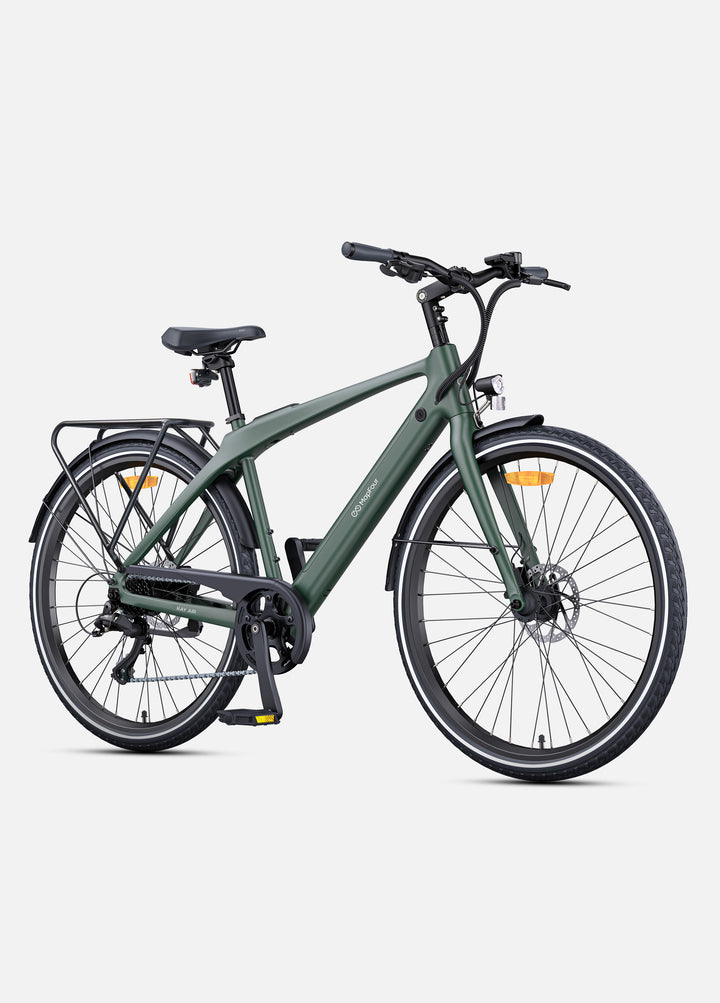
Choosing the right e-bike frame is the most important decision you'll make. It determines comfort, usability, and performance. Whether you need the easy step-through access of a low-entry frame, the stiff performance of a diamond frame, or the portability of a folding frame, this guide breaks down each style. We examine the eight key factors in frame selection to help you find the perfect e-bike for your specific lifestyle and needs.
1. Define the basic e-bike frame types
Understanding basic frame architectures is the first step. Each design serves a specific purpose, and the name usually describes how you mount the bike. Although variations exist, almost all e-bikes fall into one of these main categories. Knowing the right basic vocabulary ensures you start looking in the right category, saving you time and preventing you from buying a bike that doesn't meet your everyday needs.
-
Low entry (step-through): Also known as "low-step" or "easy-entry" frames. These are characterized by a very low or completely absent top tube, allowing the rider to mount and dismount simply by pedaling "through" the frame. This design prioritizes accessibility and comfort over structural stiffness.
-
Diamond frame (step-over): This is the traditional frame design familiar from most conventional bicycles. It features a tall top tube that connects the head tube to the seat tube. This triangular shape offers excellent structural integrity, stiffness, and performance.
-
Folding frame: These frames are equipped with one or more hinges, latches, or pivot points that allow the bicycle to be folded into a much more compact size. This design prioritizes portability and storage above all else.
-
Niche framework (“And more”): This category includes specialized designs such as cargo bikes (with extended frames for transport), compact or “minivelo” bikes (which use small wheels but are not foldable) and tandem e-bikes.

2. Match the frame style to your riding needs and lifestyle
A frame is a tool, and you need to choose the right tool for the job. The best e-bike for a fitness enthusiast is the wrong e-bike for someone who wants to run errands. Before you let yourself be swayed by technical specifications or design, conduct an honest analysis of your everyday life. Important tip is, to your most frequent Don't think about the drive. Dream tripIf you commute 90% of the time, optimize for that, not for the 10% of the time you perhaps are out in the field.
-
City commuters and errand drivers: They value ease of use, comfort, and practicality. They frequently stop at traffic lights, drive off again, and may be wearing work clothes or leisure outfits. A step-through frame is often ideal because it makes getting on and off in traffic effortless.
-
Fitness and off-road riders: They demand performance, stability, and efficient power transmission. They travel on varied terrain, conquer hills, and operate at higher speeds. A diamond frame is your best choice.Its rigid triangular structure copes far better with the forces and torque from the rider and engine, giving you more control and a more responsive ride.
-
Drivers with reduced mobility: If you have knee, hip, or back problems, or difficulty lifting your leg, a Low-entry frame essentialThe easy-entry design removes the barrier to cycling and can be a life-changing feature.
-
Multimodal commuters and homeowners: Their main concerns are storage and portability. They need to be able to take their bicycle on the train, stow it in the trunk of their car, or store it in a small cupboard. A folding frame is the obvious solution..

3. Low-entry frames: Accessibility, comfort and areas of application in detail
The step-through frame has become synonymous with comfort and convenience in the e-bike world. Its main advantage is the removal of a physical barrier. This makes it incredibly popular not only with people with mobility impairments, but with anyone seeking a relaxed and uncomplicated riding experience. However, this design does involve technical compromises that you should be aware of to make a quality decision.
-
Key advantages: Unrivaled ease of getting on and off, which is excellent in stop-and-go city traffic. It allows for riding in any clothing, including skirts, dresses, or business suits, without any hassle. Furthermore, it promotes a more upright, relaxed seating position, which many find more comfortable for leisurely journeys.
-
Things to pay attention to: To compensate for the missing top tube, manufacturers must... massively reinforce the down tubeCheaper models often cut corners here, leading to significant frame flex. This feels unstable (as if the bike is wobbly) and can lead to cracks over time.
-
Practical quality check: During a test ride, pay attention to the "feel" when accelerating and cornering. Does the bike feel spongy or unstable? Now stand next to it, apply both brakes, and push the bike from side to side. A high-quality step-through frame will feel solid, while a lower-quality one will visibly flex.
-
Battery placement: Many step-through bikes place the battery on a luggage rack, which can make the bike rear-heavy and negatively affect handling. Look for models where the battery is integrated into the downtube. or is mounted on the seat tube to achieve significantly better balanced handling.

4. Diamond frame (step-over): Performance, stability and off-road capability
The diamond frame is the classic, time-tested standard for good reason. Its geometry, consisting of two triangles, creates an incredibly strong, stiff, and lightweight structure. This is the preferred design for mountain bikes, road bikes, and performance hybrids. On an e-bike, this structural integrity is even more critical, as it must handle the additional forces and torque of the motor, especially with powerful mid-drive motors.
-
Key advantages: Superior frame stiffness results in better power transfer, more precise handling, and greater stability at high speeds. This is crucial for off-road riding or fast commuting.
-
Superior battery integration: This frame design is perfect for the In-tube battery integration Suitable. By placing the heavy battery in the downtube, the bicycle's center of gravity is significantly lowered. This makes the bike feel more stable, agile, and natural, as if the weight weren't even there.
-
Practical sizing tip: The most important dimension in this framework is the Stand-over heightThis is the distance from the ground to the top tube. You must be able to stand over the frame with both feet flat on the ground, with at least one to two centimeters of clearance. Choosing the right size is less forgiving here than with a step-through frame, so a test ride is essential.
-
Who is this for? This frame is for riders who prioritize performance. If you ride for fitness, conquer steep hills, venture onto gravel roads or trails, or simply enjoy a more direct and responsive ride, the diamond frame is the clear winner.

5. Folding frames: The ultimate solution for portability and storage
For many people, the biggest obstacle to an e-bike isn't the price, but the space. A folding e-bike solves this problem directly. It's a marvel of engineering, designed for a multimodal lifestyle: cycle to the train station, fold it up, board the train, unfold it, and ride the "last mile" to the office. This capability can revolutionize commuting and save you money in the long run.
-
The portability advantage: A folding bike can be stored in an office cupboard, in the hallway of an apartment, on a boat, or in a camper van. It also fits easily into the trunk of a car, which is very convenient for you. Saves money and effort on a complex bicycle carrier.
-
Practical inspection tip: The hinge and locking mechanism The hinges are the heart of a folding bike. Don't skimp on them. During inspection, operate the hinge several times. It should open and close smoothly, but lock without any play or wobbleGrip the frame on both sides of the hinge and try to bend it. A good hinge will feel rock hard; a bad one will creak or move.
-
The weight factor: The biggest myth about folding bikes is that they are all lightweight. E-bikes are heavy due to the motor and battery, and folding mechanisms add further weight. Always check the total weightA 30 kg folding e-bike is no longer "portable" for most people. Look for models that prioritize weight savings.
-
Driving experience: Most folding bikes use smaller 20-inch wheels. This makes them very agile and responsive when accelerating (ideal for the city), but can feel less stable at high speeds than bikes with 28-inch (700c) wheels.

6. Beyond the “Big Three”: Exploring niche frames (Cargo, Compact and Fat Tire)
The "And more" in the title covers a fascinating and growing category of specialized e-bikes. These are designed to solve very specific problems and often replace a car for certain tasks. If your needs extend beyond simple commuting, one of these frames could be the perfect solution.
-
Cargo e-bikes: These are the SUVs of the cycling world, built for transport.
-
Longtail: These have an extended rear frame with an integrated rack for panniers or even a bench seat for two small children.
-
Front loader (Bakfiets): These have a large transport box or platform before the driver, which ensures a low center of gravity and allows you to keep an eye on your children or cargo. Important tip: Are you looking for cargo bikes with hydraulic 180 mm or 203 mm disc brakes and a powerful mid-mounted engine, as the additional weight requires more braking power and torque.
-
-
Compact e-bikes (minivelo): Don't confuse these with folding bikes. A compact e-bike has a rigid, non-folding frame but uses smaller wheels (typically 20 or 24 inches). They offer a zippy, agile ride and are perfect for apartment dwellers who want a full-fledged bike but have limited storage space.
-
Fat-Tire frame: These frames are specifically designed with extra-wide forks and rear triangles to accommodate tires 4 inches wide or wider. This design isn't for speed; it's for Buoyancy and traction on soft surfaces such as sand, snow or mud The frame itself must be incredibly robust to handle the high traction and torque forces.

7. How frame material and geometry profoundly influence your choice
Once you have a style If you have chosen a frame (e.g., diamond frame), you must take into account: from which it consists of and which specific geometry He has. These factors determine the weight, comfort, and handling of the bicycle. An inexpensive aluminum frame and a premium carbon frame may look the same, but they offer completely different riding experiences.
-
Frame materials:
-
Steel: Very strong, durable, and offers a smooth, vibration-damping ride. The downside is its high weight.
-
Aluminum alloy: The most widely used material. It is lightweight, stiff, and cost-effective, offering the best balance for most riders.
-
Carbon fiber (carbon): The premium option. Carbon is Incredibly lightweight, extremely strong, and can be designed to be stiff in certain directions (for power transfer) and flexible in others (for comfort).The ability of this material to absorb road vibrations is unparalleled.
-
-
The role of geometry: Geometry refers to the angles and lengths of the frame tubes. A "relaxed" geometry offers an upright, comfortable riding position (typical for step-through frames). An "aggressive" geometry leans you forward for better aerodynamics and power transfer (typical for performance diamond frames).
-
The carbon advantage: A carbon frame is the key to a truly high-performance, lightweight e-bike. For example, the Mapfour Ray Air a Toray carbon monocoque frame – molded from a single piece. This not only makes it incredibly stable, but also allows it to absorb rough road vibrations, giving you a smooth ride without the added weight of a suspension system.
-
Product Spotlight: Mapfour Ray Air: For those seeking the pinnacle of lightweight construction, the Mapfour Ray Air is the one. best choice for your first carbon e-bike.
-
It weighs surprisingly little 15.6 kg and is therefore one of the lightest carbon e-bikes with a 100 km range on the market. This light weight makes carrying it up stairs or lifting it effortless.
-
Its drive system is optimized for efficiency, equipped with a MIVICE 250W motor and a high-quality Torque sensorThis sensor provides buttery-smooth, responsive support that feels like a natural extension of your own pedaling power.
-
It is packed with high-end features, including a solar-powered taillight and advanced Anti-theft GPS tracking.
-
Mapfour offers two versions to suit your needs: one with reliable mechanical disc brakes (160 mm) and another one with powerful features hydraulic disc brakes (160 mm).
-
With its sleek 700*38C tires and a frame that fits riders from 160 cm to 195 cm, the Ray Air is the perfect choice for the discerning rider who values performance, technology and a premium lightweight feel.
-

8. A practical buyer's guide: How to test and inspect a frame
You can read reviews all day, but nothing replaces a test ride. This is your chance for final quality checks that will save you money and hassle later. A frame might look good, but small details reveal its true quality.
-
Test drive checklist:
-
Driving on different surfaces: Don't just ride on smooth asphalt. Ride over bumps, across grass, and climb a small hill. How does the frame feel?
-
Testing the engine and brakes: Accelerate hard. Does the frame feel stiff or flex? Brake hard. Does the bike stop in a straight, controlled line?
-
The "hands-free test": Drive on a safe, flat, and empty road at a stable speed and take short and cautious Take your hands off the handlebars. The bike should ride straight. If it pulls strongly to one side, the frame could be bent – a fatal mistake.
-
-
Key quality points during inspection:
-
Welding quality (for aluminum/steel): Examine each joint. You want to see a clean, continuous pattern that resembles an "upturned roll of pennies." Avoid frames with messy, splattered, or uneven welds, as these are weak points.
-
Cable management: Are the brake and gear cables neatly routed, or is it a tangled mess? Messy cables can get caught and are a sign of sloppy installation. Internal cable routing is the cleanest and the best protected option.
-
The “Lift and Drop” test: Lift the front of the wheel a few centimeters off the ground and carefully let it drop. Listen closely. A high-quality, properly mounted wheel will make a satisfying "plop".A low-quality bike will rattle and buzz due to loose components, poor cable routing, or a cheap kickstand.
-
Check the serial number: Look for the serial number, usually stamped into the frame under the bottom bracket. If it's missing, painted over, or illegible, don't buy it.
-
Important questions about e-bike frames answered
F1: Can a step-through e-bike be used for easy trails? A1: Yes, some robustly built step-through bikes with wider tires and good (preferably integrated into the frame) battery placement can handle light gravel roads or smooth forest trails. However, a diamond frame will always be superior due to its stiffness and control in any rough or unpredictable terrain.
Q2: Is a folding e-bike less durable than a non-folding one? A2: Not necessarily. A high-quality folding mechanism from a reputable brand is precisely manufactured to be extremely strong and durable for a lifetime. However, it is a moving part where cheaper manufacturers can make mistakes; therefore, it is the most important component to check for quality.
Q3: Is the frame material more important than the frame style? A3: Both are equally important for different reasons. The style (e.g., beginner) determines your Accessibility, comfort and everyday usabilityThe material (e.g., carbon) determines the Weight, driving feel and performanceYou should first choose a style that suits your lifestyle and then the best material within that style that your budget allows.
Choosing the right frame is the first and most important step towards years of e-bike enjoyment.
Would you like to learn more about the advantages of specific frame materials, or do you need help determining the correct frame size for your height?